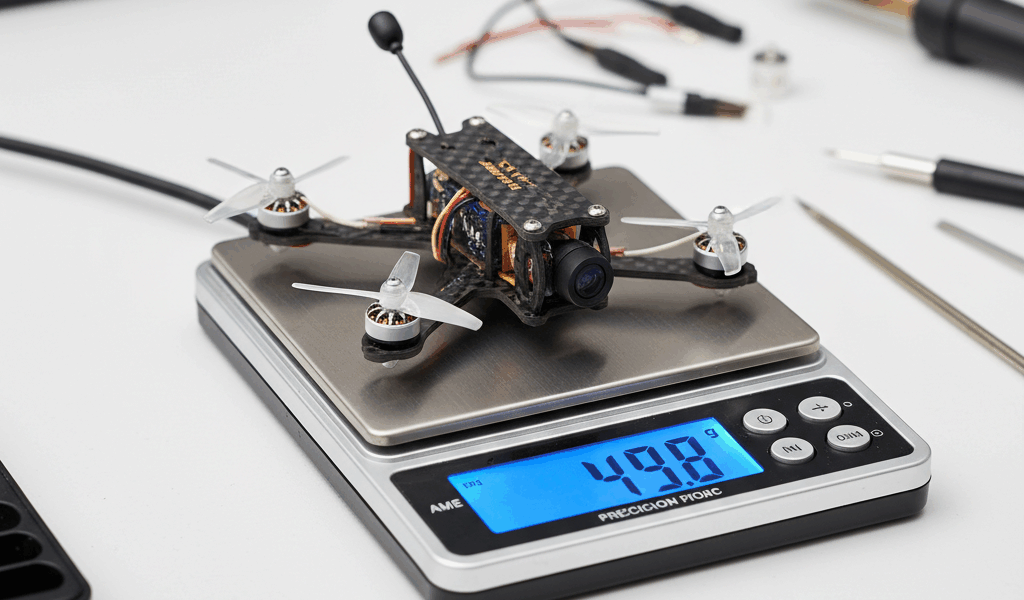
Building a sub-250g drone that actually performs requires starting with an ultralight frame. Frames weighing under 50 grams form the foundation of serious micro builds, leaving weight budget for motors, batteries, and cameras rather than structural mass.
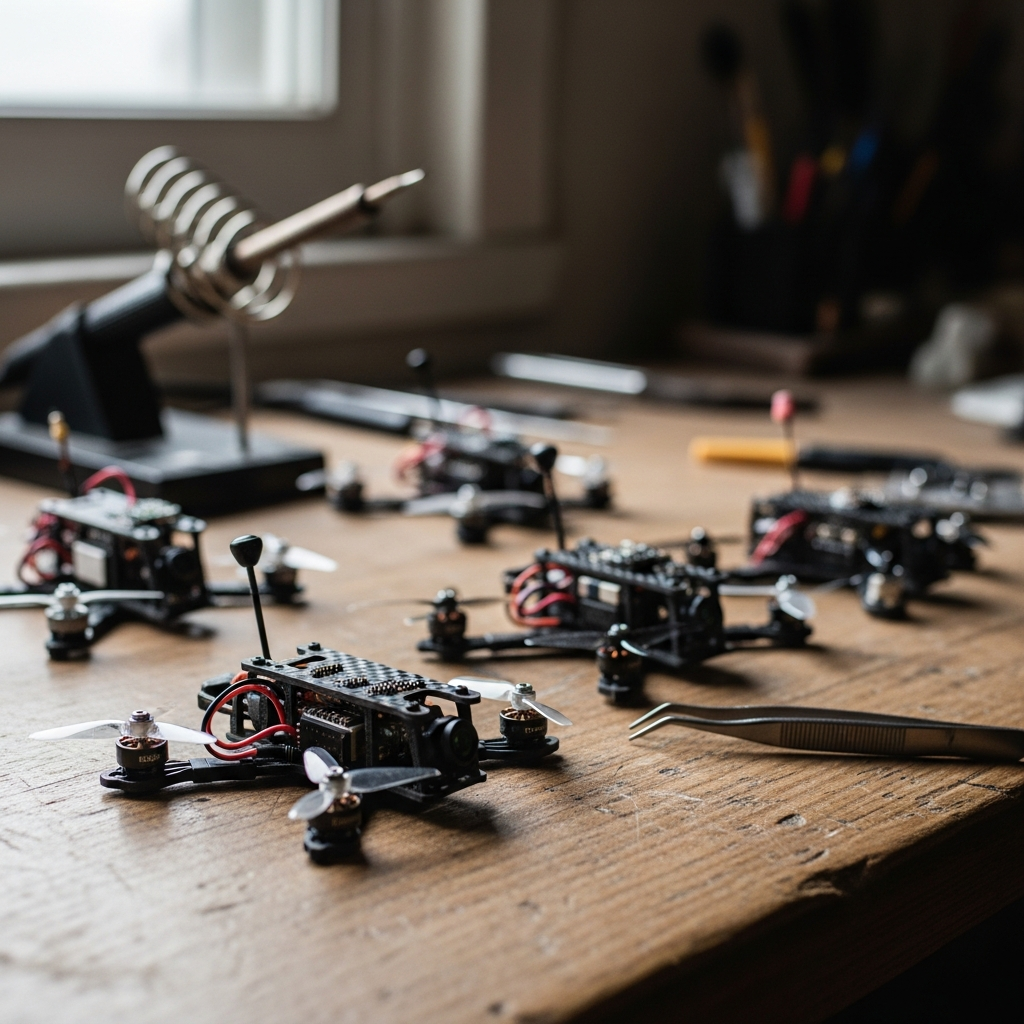
Why Frame Weight Matters
Every gram consumed by frame structure reduces payload capacity for performance components. A 30-gram frame versus a 60-gram frame leaves 30 additional grams for larger batteries, better cameras, or more powerful motors. These choices compound into significantly different flight experiences.
Lighter frames also improve maneuverability. Reduced mass means faster acceleration, quicker direction changes, and more responsive handling. Racing pilots prioritize weight above almost everything else for this reason.
Carbon Fiber Construction
Carbon fiber dominates serious ultralight builds. The material offers exceptional strength-to-weight ratios, allowing thin, light structures that resist the stresses of aggressive flying.
Quality varies dramatically among carbon fiber frames. Premium options use aerospace-grade carbon with optimized layup orientations. Budget frames cut costs with lower-grade carbon, excessive resin content, or suboptimal fiber arrangements that compromise strength without reducing weight.
Most ultralight carbon frames weigh between 20-45 grams depending on size and design complexity. A 3-inch frame might hit 25 grams while a 5-inch racing frame runs 35-40 grams. These weights enable complete builds well under 250 grams.
Frame Geometry Options
True-X geometry spaces motors equally from center for balanced thrust distribution. This classic layout provides predictable handling and works well for most applications. Most racing and freestyle frames use true-X or close approximations.
Stretched-X designs space rear motors closer together than front motors. This geometry improves forward flight stability and suits cinematic applications where smooth tracking matters more than aggressive maneuverability.
Deadcat layouts angle motors outward to keep propellers from appearing in camera footage. This configuration prioritizes clean video over flight performance—a worthwhile trade for dedicated camera platforms.
Arm Configurations
Arm thickness and profile determine crash resilience and weight. Thicker arms survive impacts better but add grams. Ultralight builders walk this line carefully, accepting some fragility for weight savings.
Replaceable arms allow economical crash recovery—breaking a 5-gram arm costs less than replacing an entire frame. However, arm attachment hardware adds weight that unibody designs eliminate.
Unibody frames mold arms and center section from single carbon sheets. This construction maximizes stiffness while minimizing weight but requires complete frame replacement after arm damage. The performance benefits often justify this fragility for competitive builds.
Motor Mounting Considerations
Standard motor mounting patterns include 9mm, 12mm, 16mm, and 19mm hole spacings. Frame selection must match intended motor compatibility—buying mismatched components creates frustrating builds.
Mounting surface flatness affects motor alignment and vibration transmission. Quality frames machine mounting surfaces precisely. Budget options may require shimming or accept suboptimal motor positioning.
Protective motor guards add weight and bulk but shield motors during crashes. Racing builds typically skip guards for weight savings. Camera platforms value motor protection over marginal weight reduction.
Stack Mounting Dimensions
Flight controllers and ESCs mount in standardized “stacks” with 20x20mm or 30.5×30.5mm mounting patterns. Frame stack mounting determines compatible electronics—verify dimensions before purchasing either frames or electronics.
Stack height within the frame affects build options and center of gravity. Taller stack areas accommodate more electronics layers but raise mass above the propeller plane, affecting handling. Tight stack spaces limit cooling and cable routing options.
Many ultralight frames support only 20x20mm stacks, eliminating larger electronics options. This constraint rarely limits modern builds since excellent 20x20mm components now dominate the market.
Camera Integration
Camera mounting provisions determine filming capability options. Frames designed for micro cameras can’t accommodate GoPro-sized action cameras without modification. Verify camera compatibility before committing to a frame platform.
Adjustable camera angles enable tuning between racing (45+ degrees) and cinematic (10-25 degrees) orientations. Fixed camera mounts limit flexibility but eliminate adjustment hardware weight.
Some frames integrate camera protection into structural design. These guards add grams but protect expensive cameras during crashes—a reasonable trade for pilots flying valuable camera equipment.
Popular Ultralight Frame Categories
Tiny Whoop frames for 65-75mm builds weigh 3-10 grams in ducted configurations. The prop guards add weight but enable safe indoor flying. Most 1S and 2S whoops use these protected designs.
Toothpick frames span 2.5-3.5 inch propeller classes in ultra-minimal configurations weighing 15-30 grams. These stripped-down platforms prioritize outdoor performance over crash protection.
Cinewhoop frames for 3-inch propellers with ducts run 40-70 grams including prop guards. The added protection enables confident proximity flying around people and property.
Micro long-range frames optimize for efficiency over agility, using lower profiles and streamlined shapes that reduce drag. Weights match standard categories but geometries differ significantly.
Material Alternatives
While carbon dominates serious builds, alternative materials serve specific niches. Injection-molded plastic frames for whoops offer impact resistance and low cost at higher weights. 3D-printed prototypes enable custom geometries though rarely match carbon strength or weight.
Aluminum components occasionally appear in hybrid designs—typically for replaceable arms or specific hardware. Pure aluminum frames remain too heavy for competitive ultralight building.
Building Light Successfully
Ultralight building extends beyond frame selection. Every component choice affects total weight—connectors, wires, hardware, accessories all contribute grams that accumulate quickly.
Successful ultralight builders evaluate each component’s weight contribution against alternatives. Titanium hardware saves grams over steel. Thinner silicone wire reduces mass. Minimal zip ties beat heavy strapping. These details compound into significant total weight differences.
Document component weights during builds. Understanding where grams accumulate enables targeted weight reduction in future projects. The lightest builds result from systematic attention to every detail rather than single dramatic changes.




Stay in the loop
Get the latest light drones updates delivered to your inbox.