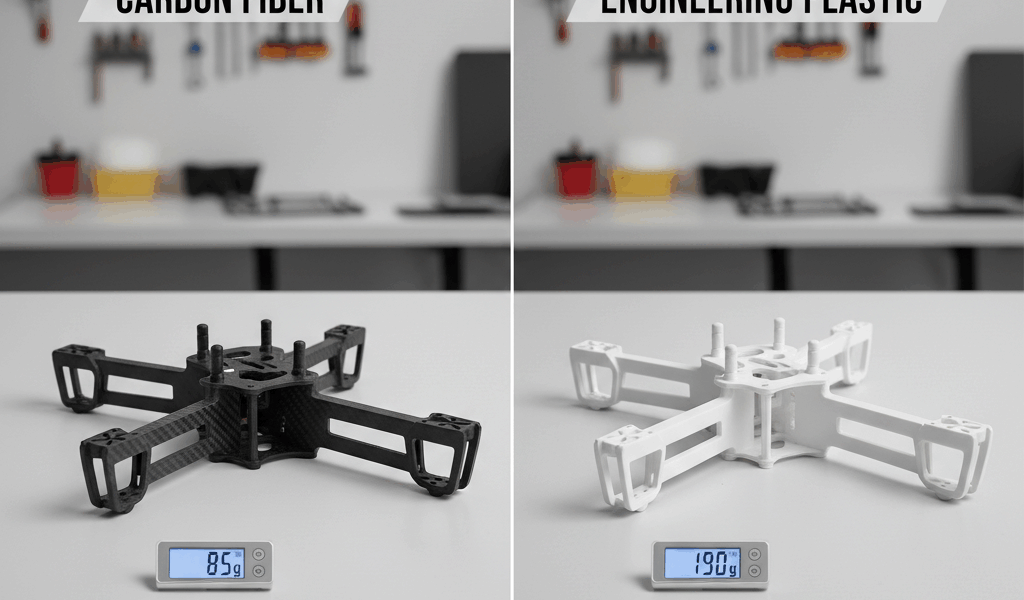
Frame material selection fundamentally shapes your sub-250g drone’s characteristics. Carbon fiber and plastic each offer distinct advantages for lightweight builds, creating choices that affect performance, durability, and cost.
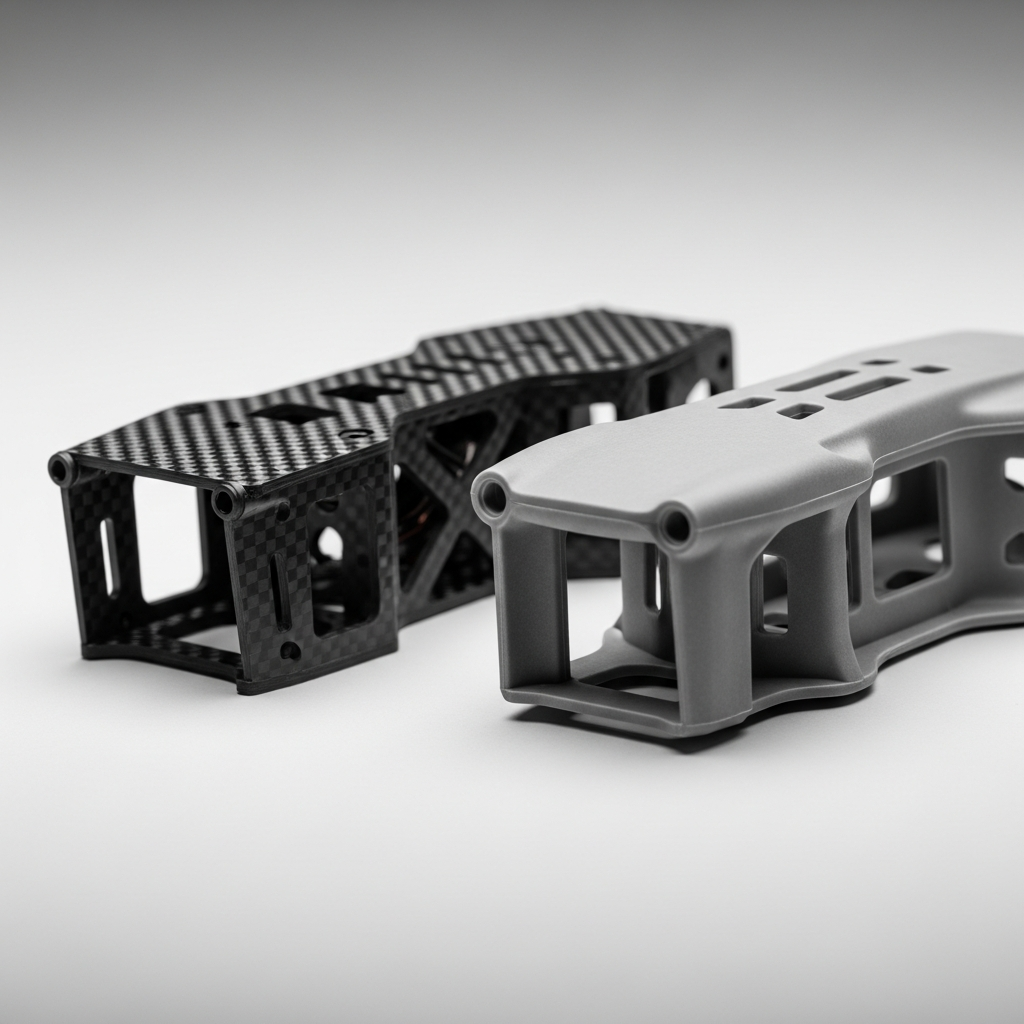
Carbon Fiber Fundamentals
Carbon fiber composite consists of thin carbon strands woven into fabric and bonded with epoxy resin. The resulting material achieves remarkable strength-to-weight ratios—stronger than steel at a fraction of the weight.
For drone frames, carbon fiber typically arrives as flat sheets cut by CNC machines into precise shapes. The sheet thickness, carbon grade, and layup orientation determine final frame characteristics. Premium carbon differs substantially from budget alternatives.
Standard drone carbon runs 2-4mm thick depending on frame section. Arms might use 3mm sheets for impact resistance while bottom plates run thinner to save weight. Variable thickness construction optimizes strength-to-weight across the frame.
Plastic Frame Varieties
Injection-molded plastics dominate budget drone construction and specialized applications like Tiny Whoops. Materials range from basic ABS to advanced engineering polymers with dramatically different properties.
Common frame plastics include ABS (acrylonitrile butadiene styrene), PA (polyamide/nylon), and PC (polycarbonate). Each material offers different balances of strength, flexibility, weight, and cost. Premium plastics approach carbon fiber stiffness while accepting impacts that would shatter carbon.
3D-printed frames use various plastics including PLA, PETG, TPU, and nylon. Print orientation and infill percentage affect strength substantially—a well-designed printed frame can match injection-molded alternatives.
Strength and Stiffness Comparison
Carbon fiber excels in stiffness—resistance to bending under load. Stiff frames transmit control inputs precisely, maintaining handling consistency through aggressive maneuvers. Flex introduces unpredictable flight characteristics.
Plastic frames flex more under equivalent loads. This flexibility can absorb crash energy that would fracture carbon, but introduces handling compromises during normal flight. The stiffness difference remains noticeable to experienced pilots.
Breaking strength varies dramatically by specific material and construction. Quality carbon fails catastrophically at high loads—snapping cleanly. Quality plastics deform progressively, bending before breaking. This failure mode difference affects crash survival substantially.
Weight Considerations
Carbon fiber achieves the best strength-to-weight ratios for stiff structures. A carbon frame meeting given stiffness requirements typically weighs less than an equivalent plastic alternative.
However, plastic designs can compensate through geometry. Hollow cross-sections, strategic ribbing, and optimized profiles allow plastic frames to approach carbon weights while maintaining adequate stiffness. Advanced plastic designs challenge assumptions about material-based weight advantages.
For sub-250g builds, weight differences between materials might span 5-15 grams for equivalent frames. This variance matters but rarely determines regulatory compliance—other component choices dominate total weight calculations.
Crash Durability
Crash performance represents plastic’s primary advantage. Flexible frames absorb impact energy through deformation rather than fracture, surviving crashes that would destroy equivalent carbon structures.
Tiny Whoop frames use plastic specifically for this durability. Indoor flying creates frequent collisions with furniture, walls, and floors. Plastic frames bounce where carbon would shatter, dramatically reducing maintenance requirements for learning pilots.
Carbon frames can survive crashes through design features rather than material properties. Replaceable arms allow economical repairs. Strategic reinforcement protects critical joints. Well-designed carbon frames manage crash damage effectively despite material brittleness.
Vibration Characteristics
Carbon fiber’s stiffness transmits motor vibrations to flight controllers and cameras more directly than flexible plastics. This vibration transmission can degrade video quality and confuse gyroscopes if not properly managed.
Soft-mounting components (using rubber isolation) addresses vibration transmission in carbon frames. Most quality builds incorporate soft mounting regardless of frame material, minimizing this disadvantage.
Plastic frames naturally dampen some vibration frequencies through material flex. This can simplify builds by reducing soft-mount requirements—though proper mounting remains beneficial.
Temperature Performance
Carbon fiber maintains properties across wide temperature ranges. Hot summer flights and cold winter sessions produce consistent handling with carbon frames. The material neither softens in heat nor becomes brittle in cold.
Plastic properties vary more with temperature. Hot conditions can soften some plastics, reducing stiffness and strength. Cold temperatures may increase brittleness, affecting crash survival. Extreme temperatures affect plastic frames more than carbon alternatives.
For most flying conditions, temperature effects remain minor. Pilots flying exclusively in moderate climates may never notice temperature-related differences between materials.
Cost Comparison
Quality carbon frames command premium prices—$30-80 for micro and mini frames depending on complexity. The material costs more than plastic, and CNC cutting requires precision equipment.
Injection-molded plastic frames cost significantly less—often $10-20 for equivalent sizes. Mass production and simpler tooling reduce manufacturing costs that pass through to consumers.
However, replacement frequency affects true cost. Carbon frames that survive hundreds of flights cost less per-flight than plastic frames requiring frequent replacement. Durability differences complicate simple price comparisons.
Repair and Modification
Damaged carbon frames generally require replacement rather than repair. While some pilots repair minor cracks with CA glue or carbon fiber patches, serious damage necessitates new frames.
Plastic frames sometimes accept field repairs—heat welding cracks, reshaping bent sections, or adding reinforcement. This repairability extends service life for pilots willing to invest repair effort.
Modifying frames differs between materials. Drilling or cutting carbon works easily with proper tools. Plastic modification risks melting or deformation without careful technique. Neither material accepts modifications gracefully once constructed.
Choosing Your Frame Material
Application drives material selection more than general preferences. Different flying styles and environments favor different materials.
For competitive racing and aggressive freestyle, carbon provides handling precision that directly affects performance. Serious pilots accept crash replacement costs for the flight quality advantages carbon delivers.
For indoor flying and learning, plastic durability saves frustration and money. Frequent crashes during skill development don’t require constant frame replacement. Many pilots graduate to carbon after mastering basics on plastic.
For camera work, either material serves well—choose based on crash likelihood. Controlled cinematic flying suits carbon’s precision. Adventure shooting with crash potential might favor plastic survivability.
Budget-conscious builders often start with plastic, upgrading to carbon after confirming their commitment to the hobby. Expensive carbon frames protecting unused drones serve no one.

Stay in the loop
Get the latest light drones updates delivered to your inbox.